Contact SavvySkull
How to contact SavvySkull to report errors, suggest sources, ask about a guide, raise rights questions about historical material, or make privacy requests.
To contact SavvySkull, write to [TBC: contact email]. Email is the only channel. There is no contact form, no chat, no social inbox and no phone line, so a message sent anywhere else will not reach us.
Before you write
Many questions are answered on the page you are reading. Each guide lists its sources at the bottom, with a note on what each source supports, and each ends with an editorial note that states what kind of guide it is and how it was prepared. Check those first. If you think a statement is wrong, compare it with the cited source, because a mismatch between the two is the most useful thing you can tell us. The editorial policy explains how guides are prepared, how sources are chosen and how corrections are made.
Reporting a factual error
If you believe a guide contains a mistake, send us the following:
- The address of the page and the heading under which the statement appears.
- The exact statement you believe is wrong, copied from the page.
- What you believe is correct, and the source for it: a manual, a standard, a regulation, a test document or a published specification, with its edition or revision date.
- The model or product, if the point concerns a particular one, and the version of the document you read.
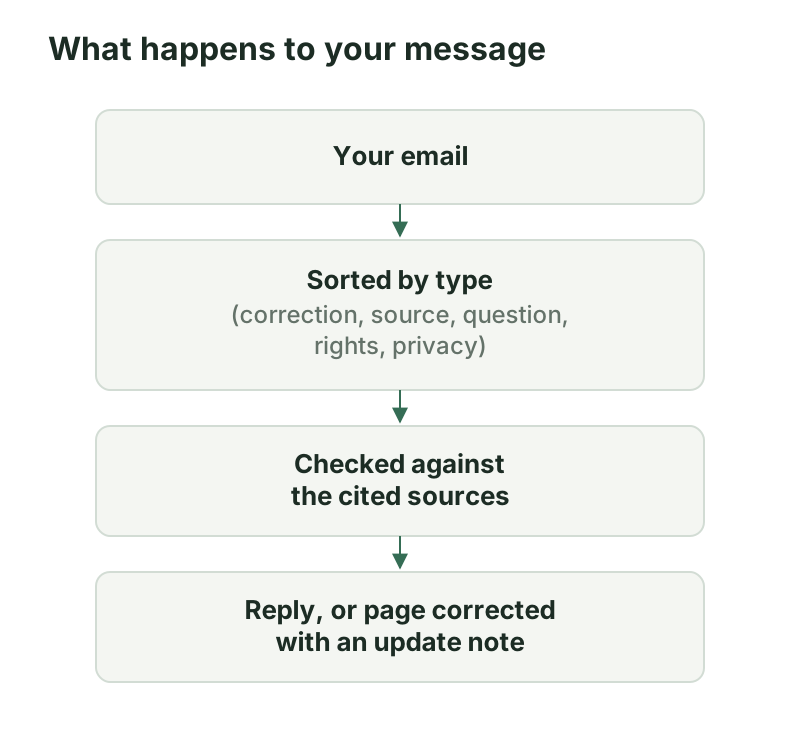
We check each report against the sources cited in the guide and against the source you supply. If the report is confirmed, we correct the page. A correction that changes the meaning of a statement is noted on the page with its date, so readers who saw the earlier wording can tell what changed. A typographical fix may be made without a note. If we cannot confirm a report, we say so and explain what we compared. If two reliable sources disagree, we may keep the statement and add the condition under which each applies.
Suggesting a source
Sources are welcome, whether they support a statement we already make or contradict it. The most useful kinds are:
- Model manuals, because they state the limits and procedures for one specific product, and a general guide cannot override them.
- Standards information, such as the scope, edition and designation of a standard, because claims about equipment often depend on exactly which edition was used.
- Original test documents, such as a laboratory report with its scope, conditions and sample description, because a summary or a marketing page can leave out the conditions that decide what the result means.
Please send a link or a citation, not a large attachment, and say which statement the source relates to. Copyrighted standards and reports should not be sent in full. A title, number, edition and issuing organization are enough for us to look them up. We cannot promise to cite every suggestion. A source is used when it is original, reachable by readers and relevant to the statement.
Questions about a guide
We can answer questions about what a guide says, why a step is included, and where a figure or claim comes from. For example, if you are unsure how a guide reads a test report, the guide on checking an equipment test report sets out what to look for, and a message to us can point to the step that is unclear. The same goes for the IP rating guide when a claim on a data sheet is confusing, or the power station sizing guide when a worksheet entry is not clear.
Our answers stay within the scope of the guide. We do not select products for your site, rank brands, or tell you which model to buy. The guides explain how to specify, compare and verify equipment. The choice depends on your site, your loads, your budget and your obligations, and those are yours to judge.
Rights and historical material from the former blog
SavvySkull also keeps a reference page about the former blog. If you hold rights in material from that blog, or you hold a copy of it, write to us and include:
- The original address of the material.
- The date and authorship, if you can show them.
- What you can show about rights and permitted use, and who holds them.
- A reliable archive snapshot or a copy of the text, if you have one.
Nothing is added to the historical page until its text, date, authorship and rights have been confirmed. A rights holder who wants material changed or removed should say so plainly and give the original address, so that we can find the entry.
Privacy requests
To ask what personal information we hold, or to ask for it to be corrected or deleted, write to the same address and say that the message is a privacy request. The privacy notice explains what the site and our email correspondence involve. You may be asked for enough detail to find the correspondence, such as the date of your message and the address it was sent from, and no more than that.
What we cannot help with
SavvySkull is a publication. It is not a manufacturer, a distributor, a testing laboratory or a consultancy. We cannot help with:
- Product support, repairs, warranty claims or spare parts. Contact the manufacturer or the seller of the product.
- Price quotes, purchases or supplier introductions.
- Engineering design for a particular site, or approval that equipment or an installation is safe, compliant or fit for a purpose. That needs a qualified professional who can inspect the site and is accountable for the decision.
- Emergencies. If someone is in danger, contact local emergency services. Email is not monitored for urgent matters.
What to expect
We read the messages we receive, and we cannot promise a reply to each one or a response time. Replies, when we send them, are written in English. A short, specific message with an address and a source is easier to act on than a long one, and corrections to guides are made when they are confirmed, which may be after you hear from us or without a separate reply.
How your message is handled
Your email is read by the people who maintain the site and is used to handle your request, check a correction and keep a record of changes. Nothing is collected through the site itself, since there is no form. The privacy notice describes how long correspondence is kept and what you can ask us to do with it. Please do not include sensitive personal information, passwords or payment details in a message, because none of them is needed to report an error or suggest a source.