Buying & Maintenance
Prepare an equipment purchase, verify the supplier's evidence and keep equipment ready with a documented maintenance and inspection routine.
Start with the job
Equipment problems often start in the paperwork: a request that left out the operating conditions, a test report for a different model, a maintenance schedule nobody wrote down. This topic helps buyers, site managers, engineers and maintenance teams handle the documents around equipment so the equipment itself performs as intended.
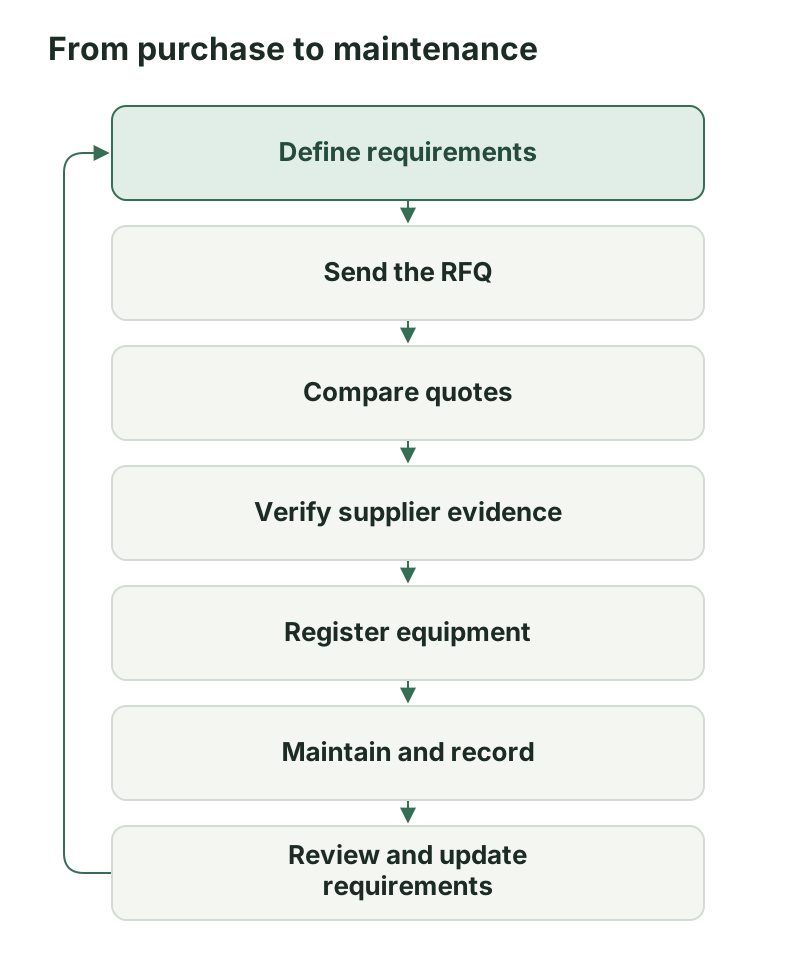
It follows a loop rather than a straight line. You define what you need, ask for it, compare what returns, verify the evidence, record what you own and maintain it. What you learn from maintenance then improves the next request. Each stage leaves a written record, so the next person on the team can see what was asked, what was promised and what was done. That habit matters most when staff change, when equipment is shared between sites, or when a warranty question arrives months after delivery and nobody remembers the original request.
A reading path
The diagram shows the six stages and the return to requirements.
If you are about to buy, start with the RFQ guide. It covers the application and quantities, operating conditions, measurable performance requirements, the documents and spares to request, and the format you want quotes returned in. Requirements from other topics feed into it, such as a power requirement from the power station sizing guide or a case specification from the waterproof case checklist.
When quotes arrive with reports or ratings attached, the test report checklist shows how to identify the issuing organization, match the report to the offered model and read its scope and limits. It is a way to organize questions for a supplier, not a substitute for accreditation review or conformity assessment.
After delivery, register each item and plan its care. The maintenance planning guide starts with an equipment register and takes every task from the manual for that exact model, recording the trigger, the owner and where the record is kept. It does not invent universal intervals.
Key terms and evidence
Measurable requirement. A requirement states a value and the condition or method it applies to. Words such as “rugged” or “high quality” cannot be compared. The RFQ guide shows the difference.
Quotation response format. If every supplier fills in the same table, quotes can be compared line by line. This is also where missing documents become visible.
Test report scope. A report supports a claim only if it covers the exact model, configuration and sample you are buying, names the standard, edition and method, and comes from an issuer you can confirm independently. See the test report checklist.
Report, certification, listing, declaration. These are different documents and prove different things. Identify what you hold before reading further.
Equipment register. A list of each item, its model, manual and location. Every maintenance task traces back to it, and the maintenance guide uses it as the starting point.
Maintenance trigger. A task is started by a calendar date, usage hours, a condition or an event such as a storm, immersion, transport or long storage.
Common mistakes
- Writing requirements as adjectives. Replace them with values and test conditions.
- Accepting a report for a similar model. Match identifiers. An IP rating on one component, for example, does not extend to the whole product.
- Leaving out documents, spares and warranty. If the RFQ does not ask, suppliers rarely offer. Ask for manuals so maintenance can be planned.
- Using generic intervals. Intervals differ by model, use and environment. Take them from the manual and note the section.
- Not recording issues. An unresolved fault that lives in someone’s memory returns as a failure. Log it and review the plan when conditions change.
How the guides divide the work
Planning pages define what to ask. Checking pages test what comes back. Maintenance pages keep equipment in a known state after delivery, and the loop closes when the review feeds the next requirement. SavvySkull does not run its own tests, so a guide will not claim hands-on results, and examples are labeled illustrative.
The topic connects to the others at several points. A purchase for a site starts in the campground equipment checklist, whose procurement plan feeds the RFQ. Case purchases combine the waterproof case checklist with report checks. Battery and light upkeep follows the manuals, as the work light buying guide notes. For the topic overviews, see protection and cases and camp and site equipment.
Templates you can reuse
On the checklists and templates page you will find the RFQ template fields, the test report verification record and the maintenance plan template, each as a CSV download with no email required. The campground equipment inventory and the waterproof case procurement checklist are good inputs for the RFQ.
Common tasks
Write an RFQ
Describe the application, conditions and documents you need so quotes are comparable.
Start with: How to Write an RFQ for Outdoor Equipment
Check a supplier's test report
Match the report to the model, sample, scope and issuing organization.
Start with: How to Check an Equipment Supplier’s Test Report
Build a maintenance plan
Start from an equipment register and the manufacturer's instructions.
Start with: Outdoor Equipment Maintenance: Building a Practical Schedule
Prepare the purchase
Define what you need and what it will cost to own.
How to Write an RFQ for Outdoor Equipment
How to write a request for quotation for outdoor equipment: measurable requirements, documents, commercial terms and a response table that makes quotes comparable.
Verify supplier evidence
Check that claims and reports apply to the model on offer.
How to Check an Equipment Supplier’s Test Report
How to check a supplier's equipment test report: document type, issuer, model and sample match, scope, conclusions, accreditation, plus a downloadable record.
Maintain and deploy
Keep equipment serviceable and release it with a record.
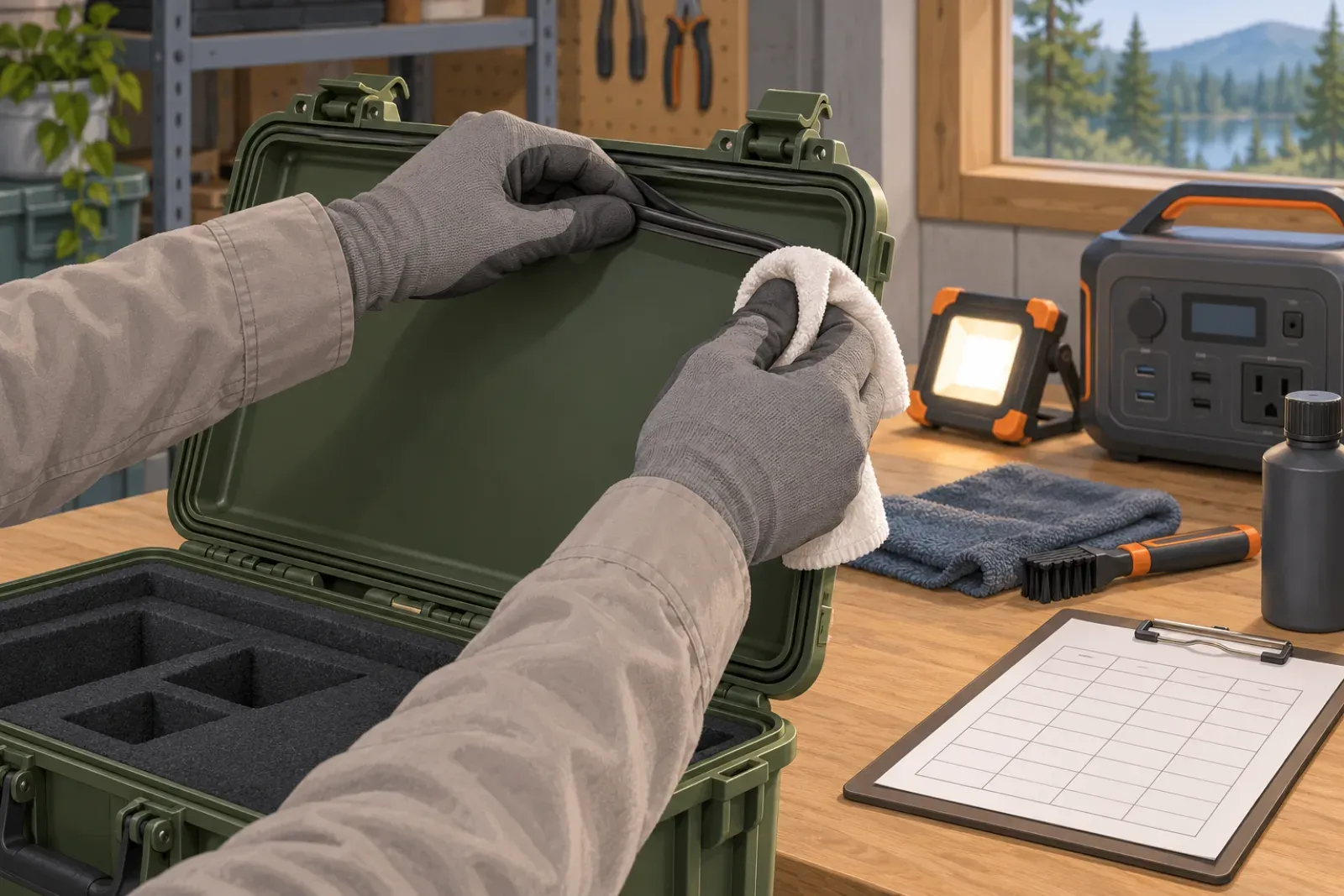
Outdoor Equipment Maintenance: Building a Practical Schedule
Build an outdoor equipment maintenance schedule from model manuals: equipment register, trigger types, task types, roles, records, and a downloadable template.
All guides in Buying & Maintenance
Scope
This topic covers procurement documents, supplier evidence checks, maintenance planning and pre-deployment inspection for outdoor equipment. It does not rank suppliers or products as the best without real tests, and it does not cover military or tactical procurement. Site rules, including electrical and fire requirements, must be checked locally, and a checklist here is not a statutory inspection or a safety approval. Sources are manufacturer manuals, published specifications and the public channels of issuing bodies.