Portable Power & Lighting
Work out how much portable power and light an outdoor site needs, then compare options and put the requirement into a purchase request.
Start with the job
Portable power and lighting decisions usually start with a vague need, such as “enough power for the evening shift” or “lights for the staging area.” This topic helps buyers, site managers, engineers and maintenance teams turn that need into numbers they can compare with a manufacturer’s published specifications. It is written for people who specify equipment for outdoor worksites, camps and field locations, not for anyone shopping by brand.
The work has two halves that depend on each other. Power is the supply: how much a station can deliver at one moment and how much energy it holds. Light is one of the loads: a task, an area and a mounting position. If you size the supply without listing the lights, or buy lights without knowing what they draw, one of the two will disappoint you.
A reading path
Read the topic in five steps. The diagram shows the order, and each step has a guide behind it.
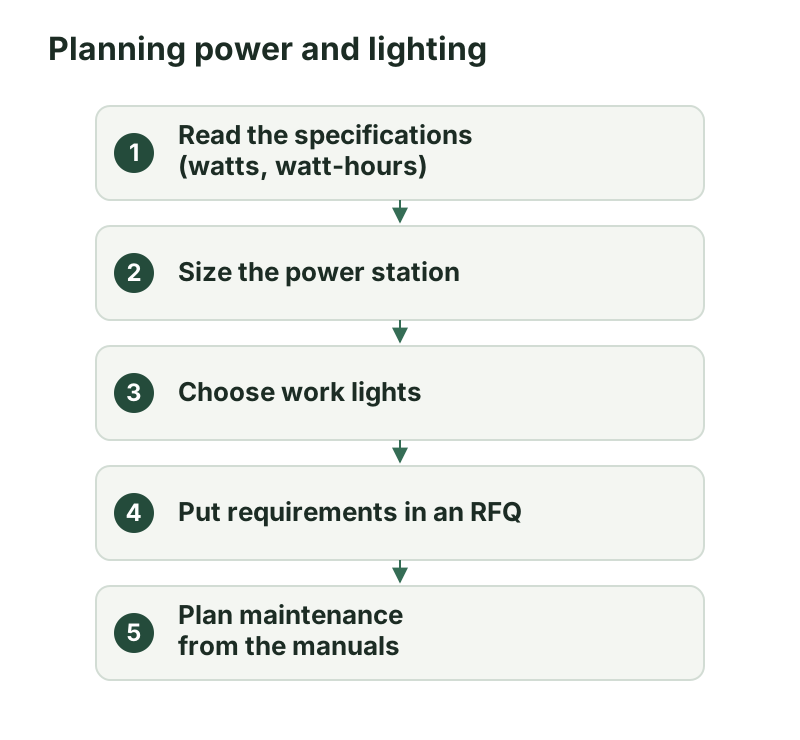
Step one is the specification sheet. Learn to separate watts (power at a moment) from watt-hours (energy over time) before you compare anything, because most sizing mistakes begin with mixing them up. Step two is sizing. The power station sizing guide takes you from a list of loads and operating hours to an energy estimate with stated loss and reserve assumptions, then checks that continuous output covers everything running at once.
Step three is lighting. The work light buying guide starts from the task and the area to cover, then compares published light output, beam pattern, runtime per mode and mounting. Step four carries the result into a purchase: the RFQ guide shows where power and runtime requirements go so every supplier answers the same question. Step five is upkeep. The maintenance planning guide builds a schedule from each model’s manual, including battery care as the manual describes it.
Key terms and evidence
Continuous versus surge watts. Continuous output is what a station can supply steadily to all loads together. Surge is a short allowance for startup of motors or compressors. The sizing guide checks both separately.
Watt-hours and usable capacity. A rated capacity is not the energy you can use. Conversion losses, temperature and reserve all reduce it, so an estimate must state its assumptions and is never measured runtime.
Lumens versus lux. Lumens describe total light output; lux describes light arriving on a surface. A larger lumen figure does not guarantee better light at your task, which is why the work light guide begins with the task and area.
Runtime claims. A runtime figure means little without the output mode and battery capacity it was measured at, and figures measured by different methods are not directly comparable.
Protection claims on lights. A housing may carry an IP code. The IP rating guide explains why the code covers one tested configuration under laboratory conditions and says nothing about UV, seal aging or impact.
Transport rules written in watt-hours. Rules for carrying lithium batteries by air are expressed in Wh, so capacity matters before a trip as well as at the site. Check the current official rules.
Common mistakes
- Adding up nameplate watts and stopping. Hours of use turn power into energy. The sizing guide’s worksheet forces both columns.
- Ignoring startup surge. A pump or compressor can exceed what continuous output suggests. Check the surge rating against the largest motor load.
- Buying lights by lumen count alone. Compare beam pattern, color rendering, runtime per mode and mounting against the task.
- Treating a rating as a guarantee. A light’s protection claim is a lab result for a specific configuration, so ask which model and edition it covers, as the test report checklist explains.
- Writing “long runtime” in the request. Adjectives cannot be compared. The RFQ guide shows how to state measurable requirements and the condition they apply to.
How the guides divide the work
Explanation pages define terms so a specification sheet reads the same way to everyone on the team. Selection pages, such as sizing and work light choice, compare options against your conditions and do not name a universal winner. Buying and checking pages turn a decision into documents, such as an RFQ and the test report checklist, which helps you confirm that a supplier’s evidence covers the model on offer. Maintenance pages keep the equipment in a known state.
The topic also feeds other hubs. A camp or temporary site needs the power and light inventory described in camp and site equipment, and every purchase eventually passes through buying and maintenance. The campground equipment checklist shows how site functions turn into the load list you start with here.
The evidence is documentary: manufacturer manuals, published specifications, standards information and public agency material. SavvySkull does not run its own product tests, so no guide claims hands-on results.
Templates you can reuse
The checklists and templates page collects the tables from these guides as CSV downloads. For this topic, use the power station sizing worksheet to list loads and assumptions, the work light comparison sheet to collect the same published data from each supplier, the RFQ template fields to write the requirement, and the maintenance plan template to schedule upkeep from the manuals.
Common tasks
Size a power station
List loads and operating hours, then compare them with a station's published output and capacity.
Start with: How to Size a Portable Power Station for Outdoor Work
Choose work lights
Define the task and working area before comparing light output, power and mounting.
Start with: Portable Work Lights: A Buying Guide for Outdoor Teams
Select and compare
Turn a list of loads and tasks into a shortlist.
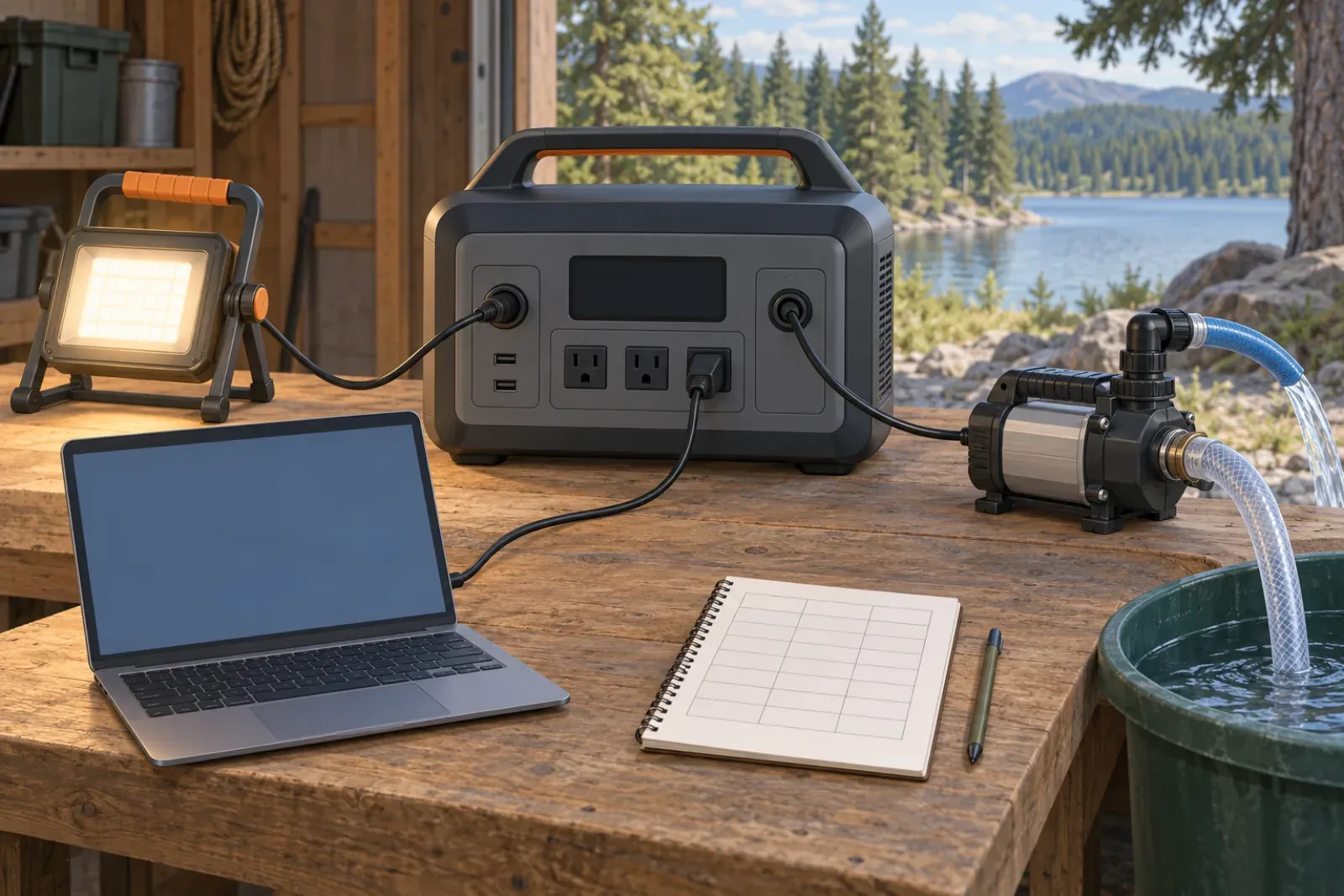
How to Size a Portable Power Station for Outdoor Work
Size a portable power station for outdoor work: list loads, check continuous and surge watts, estimate watt-hours with stated assumptions, and verify charging.
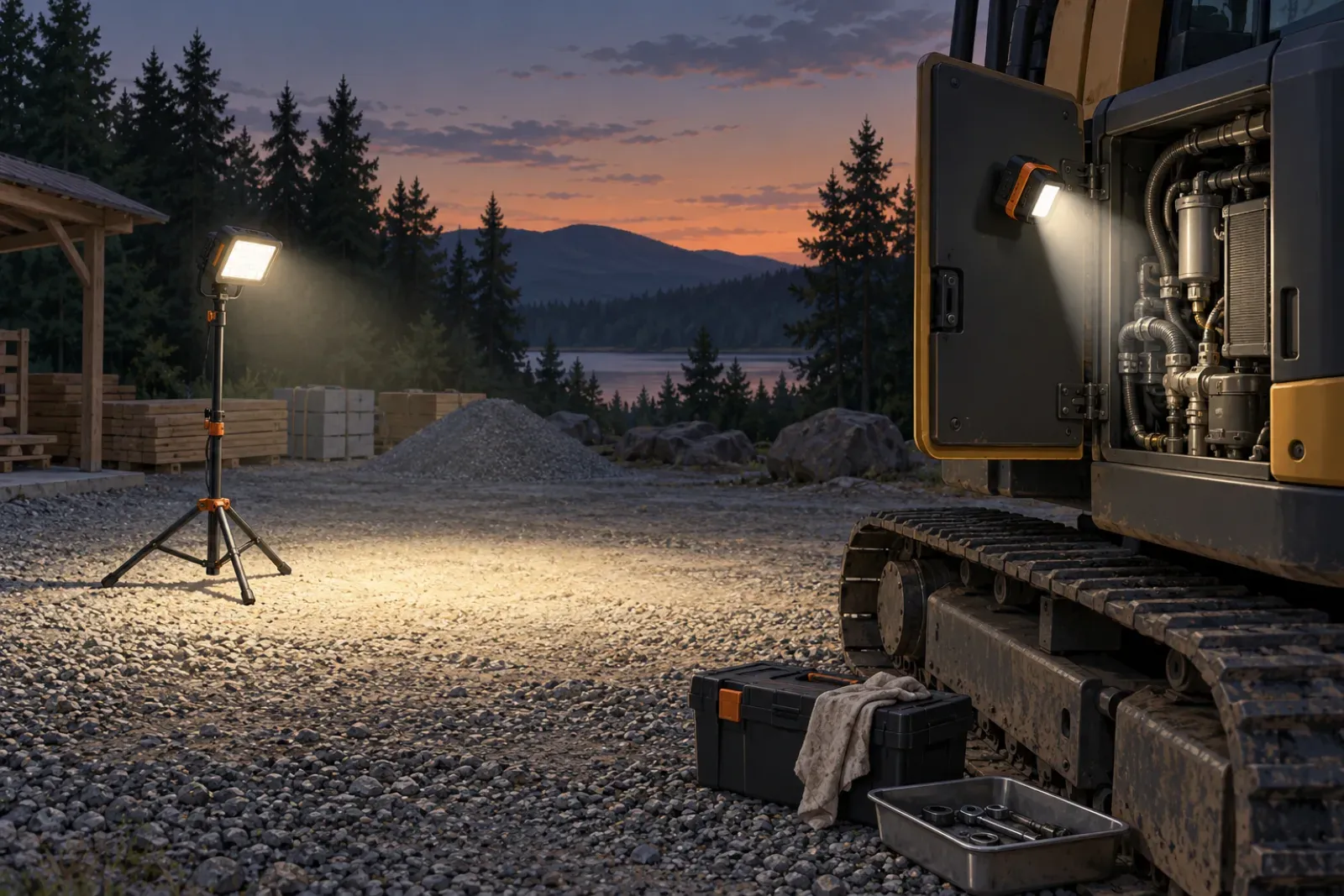
Portable Work Lights: A Buying Guide for Outdoor Teams
How outdoor teams can compare portable work lights: lumens vs lux, beam pattern, runtime claims, mounting, protection ratings, plus a supplier comparison sheet.
Buy and maintain
Put the requirement in writing and keep batteries and lights serviceable.
How to Write an RFQ for Outdoor Equipment
How to write a request for quotation for outdoor equipment: measurable requirements, documents, commercial terms and a response table that makes quotes comparable.
Outdoor Equipment Maintenance: Building a Practical Schedule
Build an outdoor equipment maintenance schedule from model manuals: equipment register, trigger types, task types, roles, records, and a downloadable template.
All guides in Power & Lighting
Scope
This topic covers portable power stations, battery and mains work lights, and the specifications used to compare them for outdoor worksites and camps. It does not rank products as the best without real tests, and it does not cover military or tactical equipment. Electrical, fire and fuel rules for a site must be checked locally, and nothing here is a safety approval. Sources are manufacturer manuals and published specifications, standards bodies and public agencies, listed on each guide.