About SavvySkull
SavvySkull is an outdoor equipment content website operated by DeltaSpark, publishing research-based guides for buyers, engineers, site managers and maintenance teams.
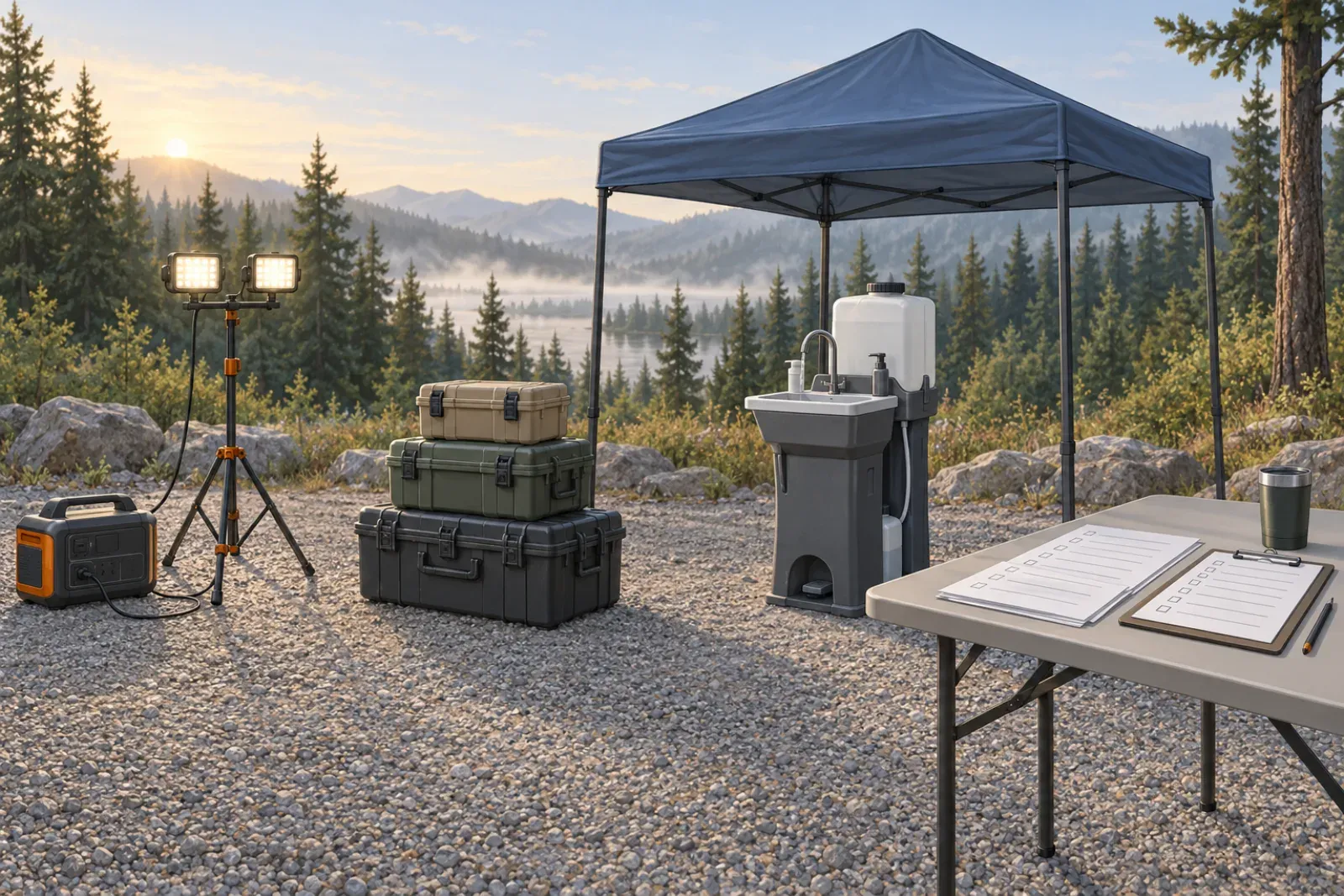
Practical information for equipment decisions
SavvySkull is an outdoor equipment content website operated by DeltaSpark. We publish guides for people who buy, specify, deploy, and maintain equipment used at outdoor worksites, camps, and other field locations.
Our coverage focuses on portable power and lighting, protective cases and equipment transport, camp and outdoor site facilities, and purchasing and maintenance practices. Our readers include equipment buyers, business owners, engineers, site managers, and maintenance teams.
How we approach our content
Our editorial approach is to identify sources, explain assumptions, and separate manufacturer statements from our own analysis. Research-based articles draw on identifiable material such as product manuals, published specifications, standards information, and public technical documentation.
Research guides are not hands-on product tests. Where an article includes practical testing, it must identify what was tested, by whom, under which conditions, and with what limitations. Where information cannot be verified, the limitation should be clear.
We organize guides around practical tasks: defining requirements, comparing specifications, reviewing supplier documentation, preparing equipment for use, and planning maintenance. The aim is to help readers ask better questions and make informed decisions, not to replace the product manual or site-specific professional advice.
The full method is set out in the editorial policy. Guides are published under the SavvySkull Editorial byline unless a named author is shown.
Ownership and commercial relationships
DeltaSpark operates SavvySkull and is responsible for the content published here. Any relevant sponsorship, referral arrangement, product supply, or ownership relationship must be identified on the affected page. A supplier mention is not, by itself, evidence that we have tested or certified its products. See the disclosures page for how each type of relationship is labeled.
What this website represents
This website is a publication, not a testing laboratory or a certification service. It is not the official support channel for the manufacturers discussed in its articles.
The current publication is operated by DeltaSpark and does not represent the author of the former SavvySkull blog. Historical material, where included, is identified separately from current editorial content. See the historical blog reference.
Corrections and contact
Please use the contact page to report factual errors, suggest sources, or ask questions about a published guide.
Who the guides are for
Each guide is written for a reader with a job to finish, not for a general audience of enthusiasts. The table shows the readers we have in mind, the task they usually bring, and where to start.
| Reader | Typical task | Where to start |
|---|---|---|
| Buyers, dealers and business owners | Write down a requirement, compare quotes, estimate cost | How to write an RFQ, then buying and maintenance |
| Site and field leads | Decide what equipment a worksite or camp needs and how it travels | Campground equipment planning and cases and protection |
| Engineers and maintenance teams | Check specifications, report scope and maintenance responsibilities | IP ratings explained, checking a test report and maintenance schedules |
| Campground and site operators | Plan power, lighting, sanitation and storage by zone | Camp and site equipment and sizing a power station |
If your task is not in the table, the four topic hubs listed below are the best entry points.
What every guide contains
Guides follow one structure so that you can find the same things in the same place. Every guide has:
- An audience line that says who the guide is written for.
- A short answer: the main conclusion, the conditions it depends on, and when it does not apply.
- A core table that compares parameters or options. It is not a ranking of brands.
- Step-by-step analysis that follows the task from start to finish.
- A section on the conditions and limits of the evidence.
- A checklist or worksheet you can reuse. These are collected on the checklists and templates page.
- Sources and versions: what each source supports and when it was accessed.
- An editorial note that states the content type, so a research-based guide is not mistaken for a test.
- Next steps that point to the guides a reader is likely to need after this one.
For two examples of the structure, see how to size a portable power station, which separates a stated-assumption estimate from measured runtime, and how to check an equipment supplier’s test report, which turns a document into a short list of questions.
How we work
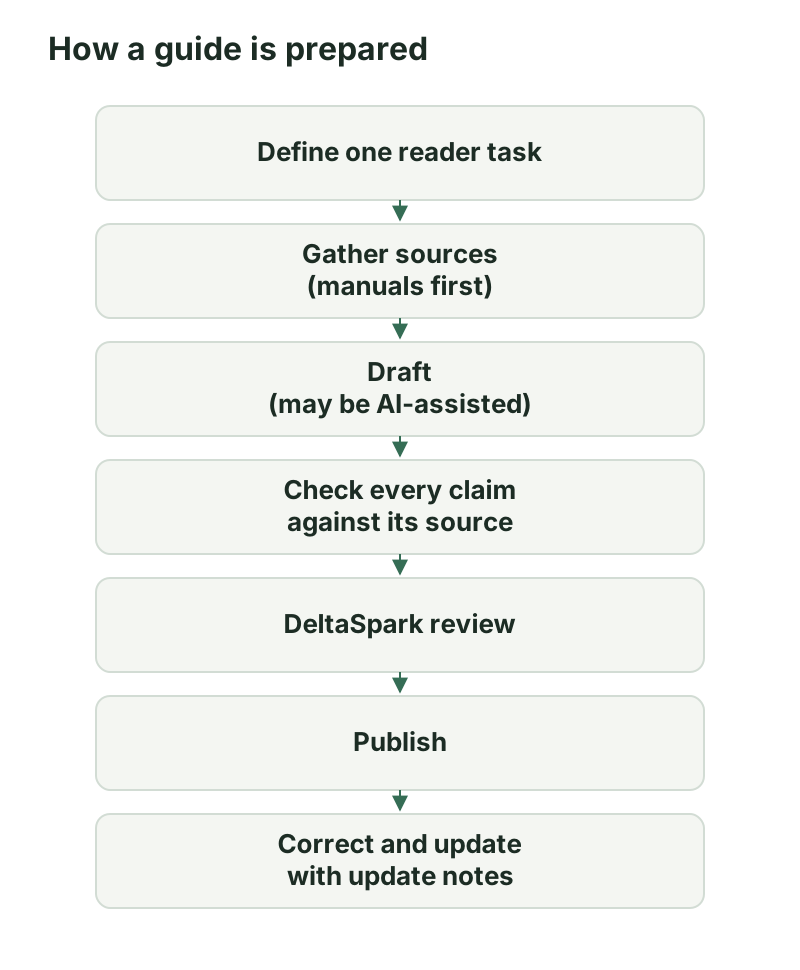
Every guide goes through the same workflow, from choosing one reader task to publishing and correcting afterward. The editorial policy describes each step in detail.
How images are made
The pictures on this site are explanatory. Illustrations show a typical situation, such as a work light on a tripod or a case with its gasket visible. Diagrams show a process or a structure, such as the steps of a sizing method. Both are labeled in their captions as an illustration or a diagram. Some are produced with AI image tools.
None of them is a photograph of a real product, a real site, or a test. When you see a work light or a case in an image, it is generic and unbranded, and it is not evidence that any product performs in a particular way. If a guide ever relies on a real photograph, the caption will say what it shows, who took it, and when.
What we do not cover
We keep the scope narrow on purpose. The site does not cover:
- Military operations, weapons purchasing or political commentary.
- General AI news.
- Travel itineraries and destination guides.
- Complete catalogs of garden machinery or packaging machinery.
- Gear rankings for the general outdoor hobbyist.
A topic belongs here when a buyer or a field team can complete a specific task with it. If you removed every commercial link from a guide, it should still help the reader finish that task. We also do not publish “best product” reviews unless there is documented testing behind them, and there is none at present.
Topics at a glance
- Portable power and lighting: sizing power stations, comparing work lights, and reading power specifications.
- Cases and protection: how protection ratings work, and how to choose a waterproof equipment case.
- Camp and site equipment: planning the equipment a campground or temporary outdoor site needs.
- Buying and maintenance: writing a request for quotation, verifying supplier evidence, and building a maintenance schedule.
- Checklists and templates: the worksheets, checklists and tables from the guides in one place.