Ownership & Commercial Disclosures
How SavvySkull discloses ownership, sponsored content, affiliate links and supplied products on the pages where they apply.
SavvySkull is operated by DeltaSpark.
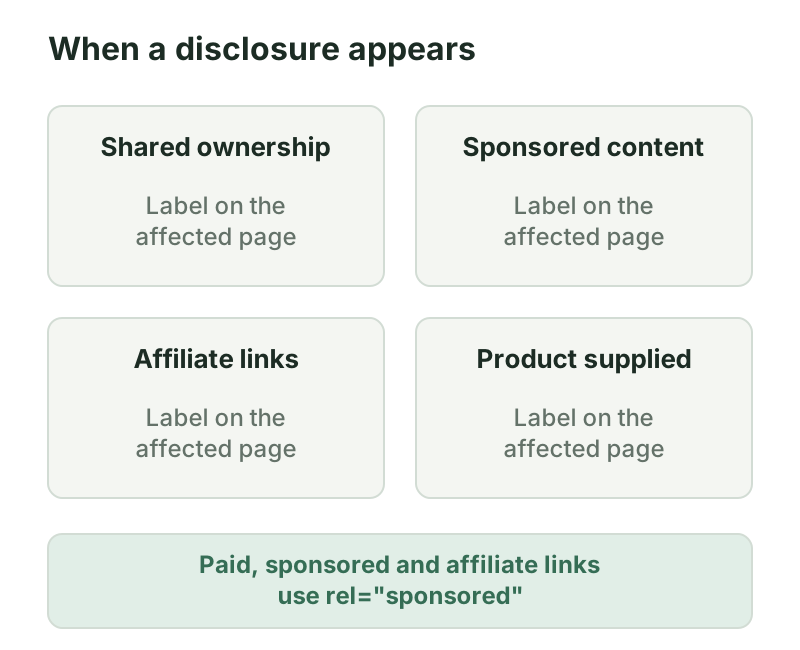
Disclosures appear on the page they affect, in a visible statement near the top or next to the relevant link. A statement appears only when the relationship actually applies to that page. The sections below explain what each one means and where to find it.
Shared ownership or operation
This applies when an article mentions a brand, product line or business that DeltaSpark also owns or operates. The article carries a plain statement, near the top and before the brand is discussed, that the named brand and SavvySkull are both operated by DeltaSpark. A link to a brand under shared operation is not automatically a paid link. It is marked as sponsored only if money or another benefit changes hands for the link itself, and the ownership statement is what tells the reader about the relationship.
Sponsored content
This applies when a company paid for the publication of an article or part of one. A sponsored content label names the company and says it paid for publication. It sits at the top of the page, above the first paragraph, and appears again next to any sponsored link in the text. Every link placed for the sponsor uses the rel="sponsored" attribute and carries a reader-visible label.
Affiliate links
This applies when DeltaSpark may earn a commission on purchases made through links in an article, because an actual referral arrangement exists. The disclosure says so directly: DeltaSpark may earn a commission from purchases made through the marked links in the article. It appears near the top of the article and next to the first marked link, so you see it before clicking. Each affiliate link uses rel="sponsored" and a visible marker. Links that are not part of the arrangement are not marked as affiliate links.
Products supplied by a company
This applies when a company supplied a product, sample or loan unit that an article discusses. The article states that the named company supplied the product, says whether the product was tested, and describes the scope of any testing. That statement appears near the top of the article and again in the section that discusses the product. A link to the supplier’s page is marked as sponsored only if the supplier arranged or paid for the link. A plain reference to the supplier’s product documentation is a citation.
Supplier-provided data and specifications
Specifications from a manufacturer or supplier are used throughout the guides, and they are treated as the supplier’s own statements. We describe them with phrases such as “according to the manufacturer’s published specifications.” We do not repeat them as verified facts or turn them into a ranking. When a supplier supplies a document directly, such as a test report or a datasheet, the guide says so and explains the document’s scope. Our method for reading those documents is in how to check an equipment supplier’s test report.
What a brand or product mention means
Naming a brand or a product in a guide means the guide discusses it, and nothing more. We have not necessarily tested, certified or ranked it, and we do not recommend it over others. The maker has not necessarily approved what we wrote. Most guides use generic, unbranded examples because they teach a method, such as sizing a power station or comparing waterproof cases. If a mention comes with a relationship from the sections above, the label for that relationship appears on the page.
Affiliated sites cited in an article
If a site owned or operated by DeltaSpark is ever cited in an article, it is cited only when it supports a specific fact the reader needs, for example a manual or a data table. It gets the same source details as any other source, and an ownership disclosure appears where the relationship applies. We do not add links to affiliated sites to build traffic or fill a quota.
How links are marked
Paid, sponsored and affiliate links use the rel="sponsored" attribute and carry a reader-visible label. Ordinary citations to sources, such as standards bodies or government agencies, are not marked this way, because no payment or benefit is involved. Links between SavvySkull pages are ordinary internal links.
How to report a missing disclosure
If you think a page should carry a disclosure and does not, tell us through the contact page. Include the page address and what you believe is missing. We review the report, add or correct the label if a relationship applies, and describe the change in an update note on the page. You can also report a link that seems to be paid but is not labeled.
What this page does not say
This page does not claim that no relationships exist or that SavvySkull is free of commercial influence. It describes how relationships are disclosed when they apply. Editorial practices are in the editorial policy, and the byline used on guides is explained on the SavvySkull Editorial page. To ask a question about a disclosure, use the contact page.