SavvySkull Editorial
SavvySkull Editorial is the byline used for articles prepared and maintained by DeltaSpark for SavvySkull. What it means and which guides use it.
SavvySkull Editorial is the editorial byline used for articles prepared and maintained by DeltaSpark for SavvySkull. Research methods, sources, and any testing are described in the relevant article.
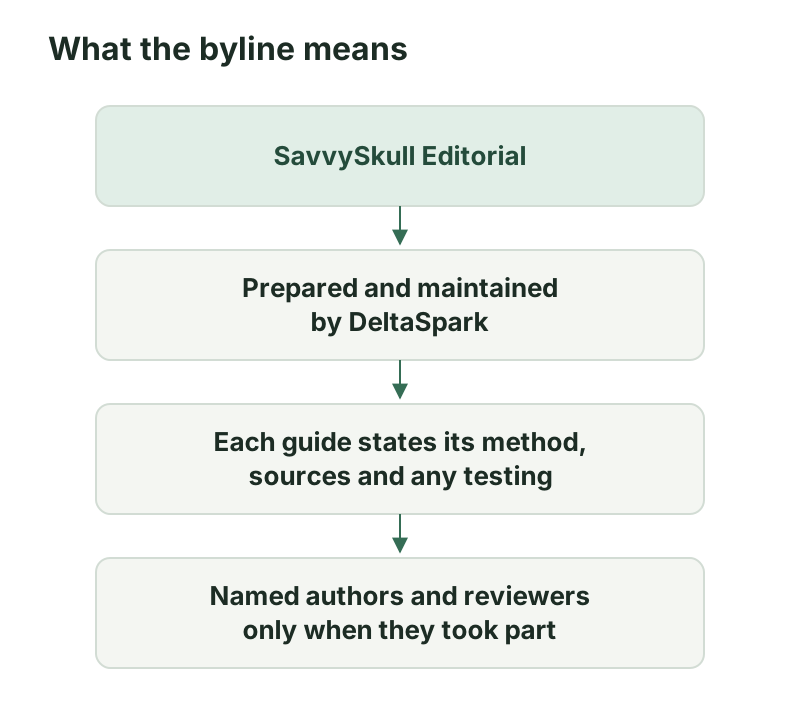
What the byline means
The byline identifies editorial publication by DeltaSpark, which is responsible for the content. It does not imply an engineering team of any size, and it does not imply that a guide was tested unless the guide documents a test.
Real authors and technical reviewers appear on a guide only when they took part and their identity can be verified. Methods are described in the editorial policy, and more about the publication is on the About page.
What the byline covers and what it does not imply
The byline covers the editorial work of choosing the topic, gathering sources, drafting, checking claims against sources, and reviewing before publication, all carried out under DeltaSpark. It also covers later updates and corrections.
It does not imply any of the following:
- A laboratory, a test program or hands-on product testing.
- A named team of engineers, or any particular headcount.
- A professional license, a certification or a regulatory approval.
- That a manufacturer has endorsed or reviewed the content.
- That the guide replaces the product manual or advice from a qualified professional on your site.
Where a guide describes a test, it must state what was tested, who did it, the conditions and the limits. Without that, it is desk research.
How a guide under this byline is prepared
A guide starts with one reader task and a source list led by model manuals, then goes through drafting, a claim-by-claim source check, and a review by DeltaSpark before it is published. Later changes are described in update notes on the page. The steps are described in full in the editorial policy, and the disclosure labels that may appear on a page are explained on the disclosures page.
How named authors and technical reviewers would be shown
If a real person writes a guide, the guide shows that person’s real name as author. If a qualified person reviews the technical content, the guide names the reviewer and says what was reviewed. We show a name only when three things are true: the person took part, their identity can be verified, and they agree to be named. A reviewer’s claim of expertise has to be something a reader could check. Until those conditions are met for a specific guide, the guide carries the SavvySkull Editorial byline and no reviewer line.
Why we do not use invented personas
Some sites invent author names, generate headshots and list credentials that nobody holds, so that content looks more expert than it is. We do not do this. There are no fictional authors, no stock or generated portraits presented as people, and no made-up degrees or job titles on this site. Readers should be able to trust that a name shown on a page belongs to a real person who did the work. The byline is plain about who is responsible: DeltaSpark.
Corrections and questions about a guide
Because DeltaSpark is responsible for every guide under this byline, corrections go to DeltaSpark too. If you find a factual error, a source that no longer supports a claim, or a missing disclosure, use the contact page. A correction is made on the page and noted there with its date, so readers can see what changed. If you want to know how a specific figure in a guide was obtained, ask, and we will point to the source or say that it was an assumption.
Guides under this byline
Each guide below is published under this byline. They are grouped by topic, and each topic has a hub page that lists related guides.
Power and lighting
Hub: portable power and lighting
- How to size a portable power station for outdoor work: a method for listing loads, checking continuous and surge watts, and estimating watt-hours with stated assumptions. It includes a downloadable worksheet.
- Portable work lights: a buying guide for outdoor teams: explains lumens versus lux, beam pattern and runtime claims, and gives a sheet for comparing suppliers on the same evidence.
Cases and protection
Hub: cases and protection
- IP ratings for outdoor equipment: how to read protection claims: shows what the two digits of an IP code do and do not say, and what to ask before relying on a rating.
- Choosing a waterproof equipment case: a procurement checklist: covers dimensions, seals, latches, valves and the scope of rating claims, for writing into a quote request.
Camp and site equipment
- Campground equipment planning: building a procurement checklist: turns a site layout into zones, an inventory of essential and optional items, and a procurement plan.
Buying and maintenance
- How to write an RFQ for outdoor equipment: helps you describe requirements as measurable values so that supplier quotes can be compared line by line.
- How to check an equipment supplier’s test report: walks through identifying the document type, matching model and sample, reading scope and confirming the issuer.
- Outdoor equipment maintenance: building a practical schedule: builds a maintenance plan from model manuals, with triggers, responsibilities and records.
The worksheets and checklists from these guides are collected on the checklists and templates page.