Flying with a Portable Power Station: A US Field-Team Battery Screening Checklist
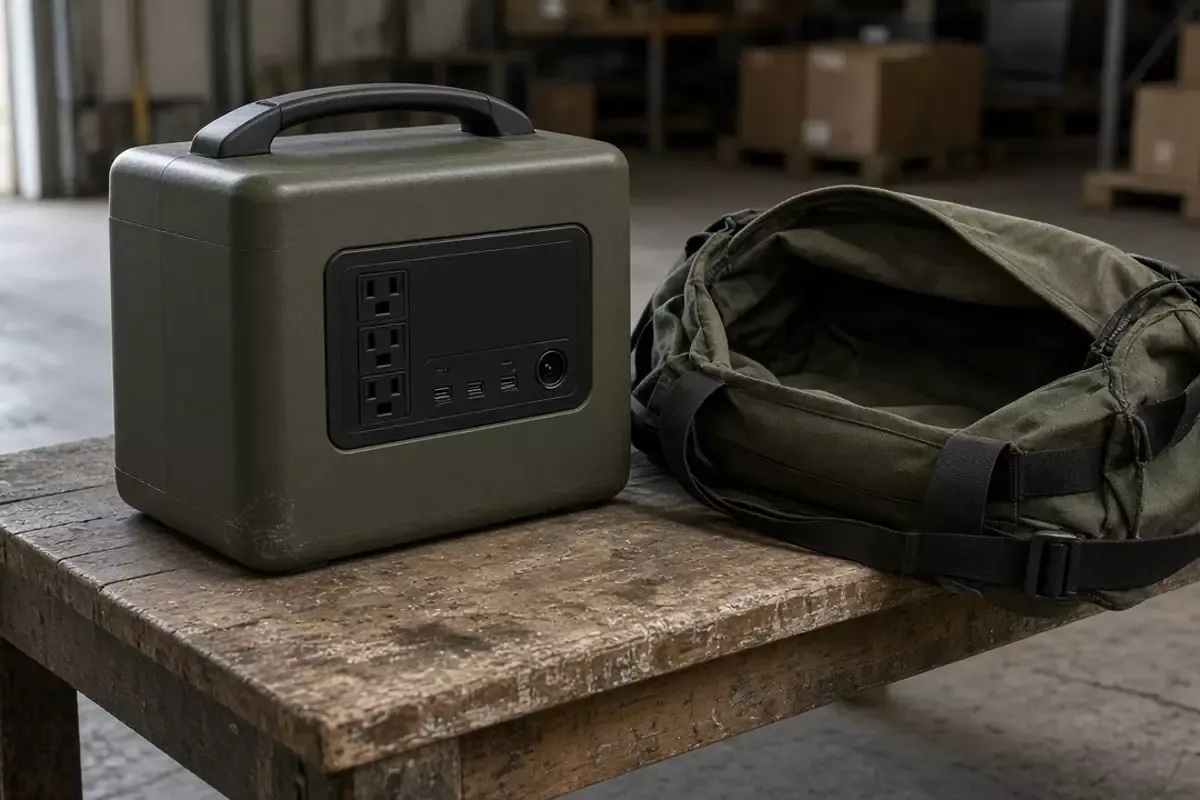
Packing the output-watt figure fails the passenger battery screen and leaves the crew without that supply. Copy the marked watt-hours, then set that number against the U.S. passenger bands before the unit goes into a bag.
Do not pack the station until the watt-hour cell, the damage cell, and the carrier-reply cell are filled from documents. A copied figure over 160 watt-hours is still do-not-carry on the October 2, 2026 passenger page. The FAA Airline Passengers and Batteries page, saved 11 October 2026 and last updated Friday, October 2, 2026, allows rechargeable batteries of 0–100 watt-hours, requires air-carrier approval for 101–160 watt-hours, and forbids batteries over 160 watt-hours. Spare power banks and portable chargers are carry-on only and cannot be checked. DELTA 2 User Manual V1.0 prints 1,024Wh. DELTA 2 Max User Manual V1.0 prints 2,048Wh. The Explorer 3000 Pro manual prints 3024Wh. Each of those three capacity lines is over 160 watt-hours. Hours of use for the job stay on the sizing guide. This sheet does not replace the carrier’s own rule.
Scroll horizontally to see all columns.
| Record | What to write | Why it matters |
|---|---|---|
| Capacity (Wh) | The watt-hour line on the manual or the label | The October 2, 2026 passenger page sorts batteries by watt-hours |
| Output (W) | The watt line, in a separate cell | 1,800W on DELTA 2 V1.0 is output, not the 1,024Wh capacity |
| Damage or recall | Yes, no, or unknown | A damaged or recalled battery that can spark or overheat stays off the aircraft unless it has been made safe |
| Carrier reply | Date, watt-hour limit, and quantity limit the airline stated | The same FAA page says airlines may set stricter limits |
| Gate plan | Whether the bag will be checked at the gate | Spare power banks come out of a bag checked at the gate or planeside |
Which number do you copy, watts or watt-hours?
Copy watt-hours. A watt figure is power at one moment. A watt-hour figure is stored energy. The October 2, 2026 passenger page tells you to read watt-hours from the battery. If the watt-hour mark is missing, multiply volts by amp-hours. The page’s own example is a 12-volt battery rated 8 Ah, which is 96 Wh, because 12 × 8 = 96. If the label prints milliamp-hours, divide that number by 1,000 and then multiply by the volts. If either the volts or the amp-hours are missing, leave the calculated cell blank.
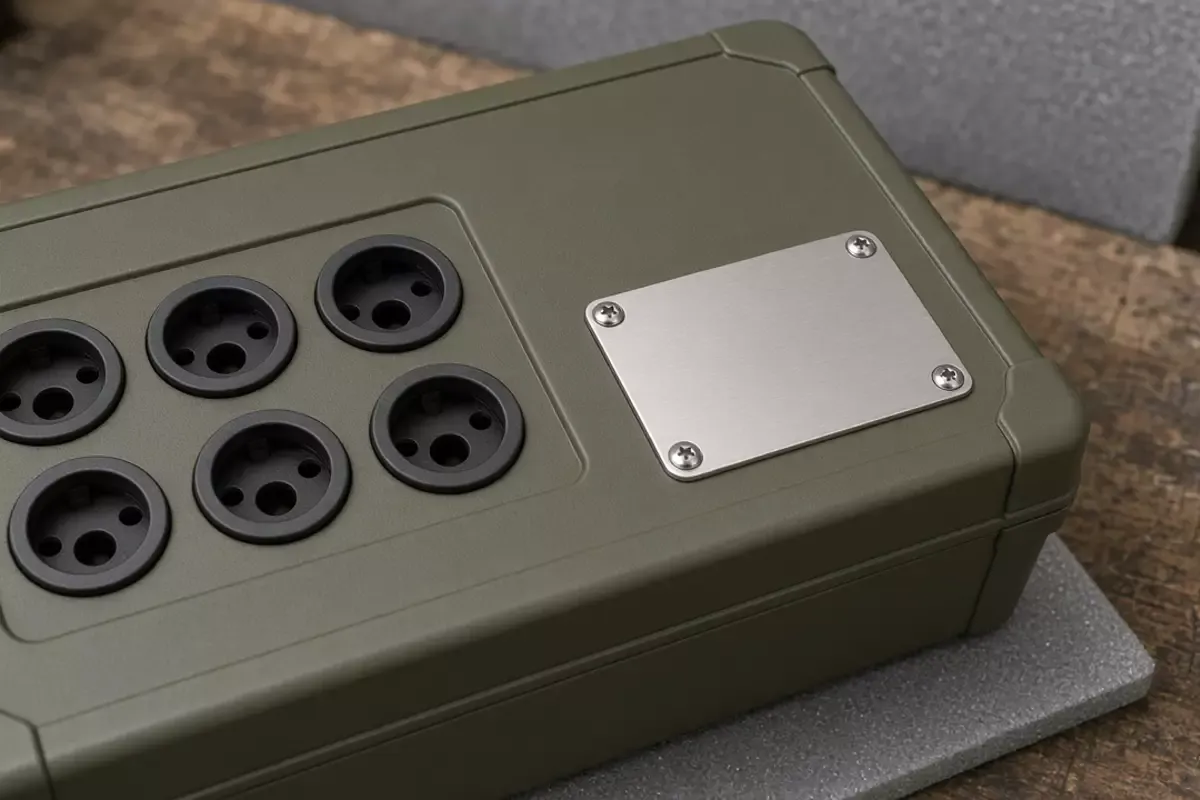
The photograph shows sockets on one part of the housing and a blank plate on another. It does not show a watt-hour mark. The sockets are where an output-watt claim usually sits. The plate is where a specification line would sit if one were printed. Do not treat a blank plate as zero watt-hours, and do not treat a socket count as a battery rating.
Common mistake: writing the output watts into the watt-hour cell. DELTA 2 User Manual V1.0 prints both “1,800W total” for AC output and “1,024Wh” for capacity. DELTA 2 Max User Manual V1.0 prints “2,400W total” and “2,048Wh”. The Explorer 3000 Pro manual prints “3000W Max” and “3024Wh”. Those pairs are not the same number, and the flight screen uses the watt-hour one.
The DELTA 2 User Manual V1.0 answers the plane question with no.
Where does that watt-hour figure sit on the FAA passenger page?
Use the band that matches the watt-hours you actually copied. The table below is the October 2, 2026 passenger page, fetched 11 October 2026. It is not an airline approval, and it is not a rule for cargo.
Scroll horizontally to see all columns.
| Copied watt-hours | What that page says | Spare power bank, carry-on | Spare power bank, checked |
|---|---|---|---|
| 0–100 Wh | Allowed for the passenger’s own use. The page states no quantity limit for rechargeable batteries under 100 Wh when they are for personal use. Batteries carried for sale or distribution are prohibited. | Yes | No |
| 101–160 Wh | Approval from the air carrier. Limit of two spare batteries per person, and the page includes power banks and portable chargers in that spare count. | Yes, after that approval | No |
| Over 160 Wh | Forbidden on passenger aircraft. | No | No |
| Watt-hours not printed, and volts or amp-hours missing | Leave the band blank. | Blank | Blank |
The same page has a row for lithium-battery-powered generators. The examples it names are stand-alone generators, back-up generators, and part of a solar power system. The row says these exceed the 160 watt-hour lithium-battery limit and are forbidden on passenger aircraft, in both carry-on and checked baggage. Write that row name only when the carrier or the manual uses it. Do not assign it because the product is large.
A separate row covers portable electronic devices such as a phone or a laptop. The page says the same watt-hour limits apply, and that those devices can be checked only when they are completely powered off and protected from accidental activation. A power station is not that row unless the carrier says so. The spare-battery row is the one that names power banks and portable chargers, and that row is carry-on only.
The PackSafe lithium-batteries page, saved the same day and last updated Tuesday, August 11, 2026, states the 100 watt-hour limit and airline approval for up to two larger spare lithium-ion batteries, which it describes as exceeding 101–160 Wh. It also points to 49 CFR 175.10(a)(18). Where the two FAA pages use different wording, keep both dates on the sheet and follow the stricter line the carrier confirms.
If the label says lithium metal, non-rechargeable, stop using the watt-hour bands. The August 11 page limits lithium metal to 2 grams of lithium per battery, and it allows airline approval for larger lithium-metal batteries it describes as exceeding 2–8 grams. Spare lithium-metal batteries are carry-on only. Copy the grams. Leave the watt-hour cell blank.
The October 2 page says Transportation Security Administration screening, the individual airline, and international rules may, at times, be more restrictive than the U.S. Department of Transportation lines it is summarizing. This sheet does not restate those other rules. The carrier-reply cells stay empty until that airline answers.
Takeaway: Over 160 watt-hours on a copied spare-battery line is do-not-carry on this sheet. The October 2 page does not list an approval step above 160 Wh for spare batteries and power banks.
What do the three opened manuals print?
These three rows are the manuals opened for this page. They are not a ranking, and they are not a survey of every portable power station. A model that is not listed stays a blank row.
Scroll horizontally to see all columns.
| Manual | Capacity line | Output line, kept separate | Plane answer in that saved text |
|---|---|---|---|
| DELTA 2 User Manual V1.0 | 1,024Wh, 51.2V | AC output, pure sine wave, 1,800W total (surge 2,700W), 120V | FAQ item 7: “Can I bring the product on a plane?” Answer: “No.” |
| DELTA 2 Max User Manual V1.0, model EFD350 | 2,048Wh | AC output, pure sine wave, 2,400W total (surge 4,800W), 120V | FAQ item 7: “Can I bring the product on a plane?” Answer: “No.” |
| Explorer 3000 Pro, model JE-3000A, manual JAK-UM-V1.0 | Lithium-ion 70Ah/43.2V DC (3024Wh) | Total AC output 3000W max, 6000W surge peak | The saved text has no airplane yes or no |
The Explorer parentheses match the FAA multiplication. 43.2 × 70 = 3,024. That checks the manual’s own capacity line. It is not a measurement made for this page. 1,024, 2,048, and 3,024 are each over 160, so the October 2 forbidden line covers all three printed capacities. The two EcoFlow answers of “No” are the manufacturer’s sentences, in addition to that FAA line.
DELTA 2 V1.0 names the cell chemistry as LFP. DELTA 2 Max V1.0 names the battery type as LFP. The Explorer manual names lithium-ion on the capacity line. The two FAA pages opened here do not give LFP a separate watt-hour band. Record the chemistry word. Do not treat LFP as an exemption.
What do you record before the carrier replies?
The October 2 page says many airlines, domestic and international, may have stricter quantity and watt-hour limits on spare batteries, including power banks, regardless of watt-hour capacity, and it says to check the air carrier before traveling. Call or write that carrier with the manual edition and the copied watt-hours. Write the reply in the carrier cells. A verbal “usually fine” with no watt-hour figure stays out of the watt-hour cell.
Scroll horizontally to see all columns.
| Field | Write this | Leave blank when |
|---|---|---|
| Unit | Name and model | The housing has no name you can read |
| Manual edition | Title and version, such as V1.0 | You do not have that edition |
| Capacity Wh | The printed watt-hour number | The document does not print watt-hours |
| Volts and amp-hours | Only numbers printed on that label | One of the two is missing |
| Calculated Wh | Volts times amp-hours, using the FAA step | You would have to invent a volt or an amp-hour |
| Personal use or for sale | Personal use, or for sale or distribution | You have not decided. Batteries for sale or distribution are prohibited |
| Carrier, date, limits | The airline, the date, the watt-hour limit, and the quantity limit they stated | They have not answered |
Under 100 Wh, the October 2 page states no quantity limit for personal-use rechargeable batteries, and it still tells you to check the carrier because the carrier’s number can be lower. From 101 to 160 Wh, the spare limit on that page is two per person, including power banks and portable chargers. Over 160 Wh, do not ask the sheet to convert a forbidden battery into an approved one.
If this unit cannot travel, name the loads that still need power and pick another supply on paper. The generator comparison separates a fuel generator from a battery station. It does not name a smaller station that is under 160 watt-hours. This page did not open a manual for a station in the 0–100 Wh band, so that replacement cell stays empty until you have that other document.
What changes if the bag is checked at the gate?
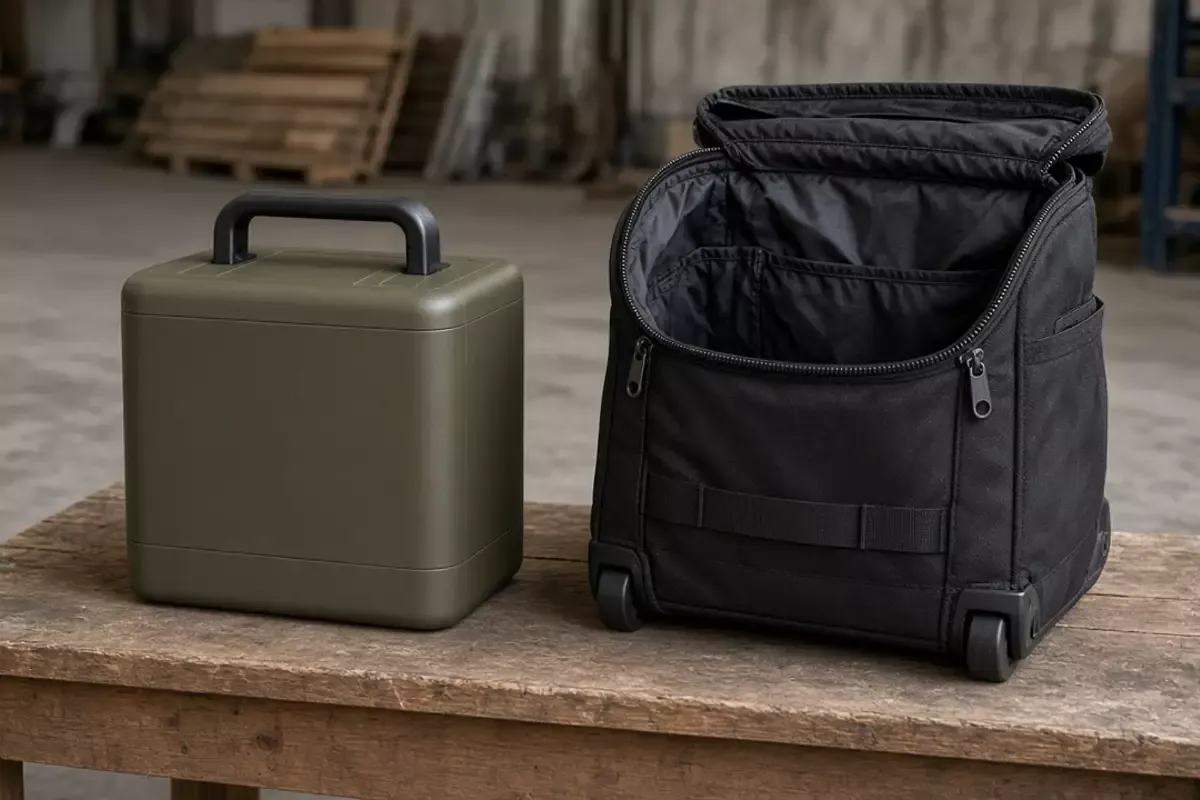
The photograph shows the box outside the open bag. It is not an airport, and it is not a packed kit. The August 11, 2026 lithium-batteries page says spare lithium-ion and lithium-metal batteries, including power banks, must be in carry-on baggage only. When a carry-on is checked at the gate or at planeside, spare lithium batteries and power banks come out of the bag and stay with the passenger in the cabin. Battery terminals are protected from short circuit. The page lists retail packaging, tape on the terminals, a battery case, a sleeve, or a snug plastic bag or pouch.
That removal step is for spare batteries and power banks. It is not a way to check a battery that is over 160 watt-hours. The October 2 page forbids batteries over 160 watt-hours in both carry-on and checked baggage. Pulling the DELTA 2, the DELTA 2 Max, or the Explorer 3000 Pro out of a gate-checked bag does not change the capacity lines above.
What do you do when the housing is damaged or the battery is recalled?
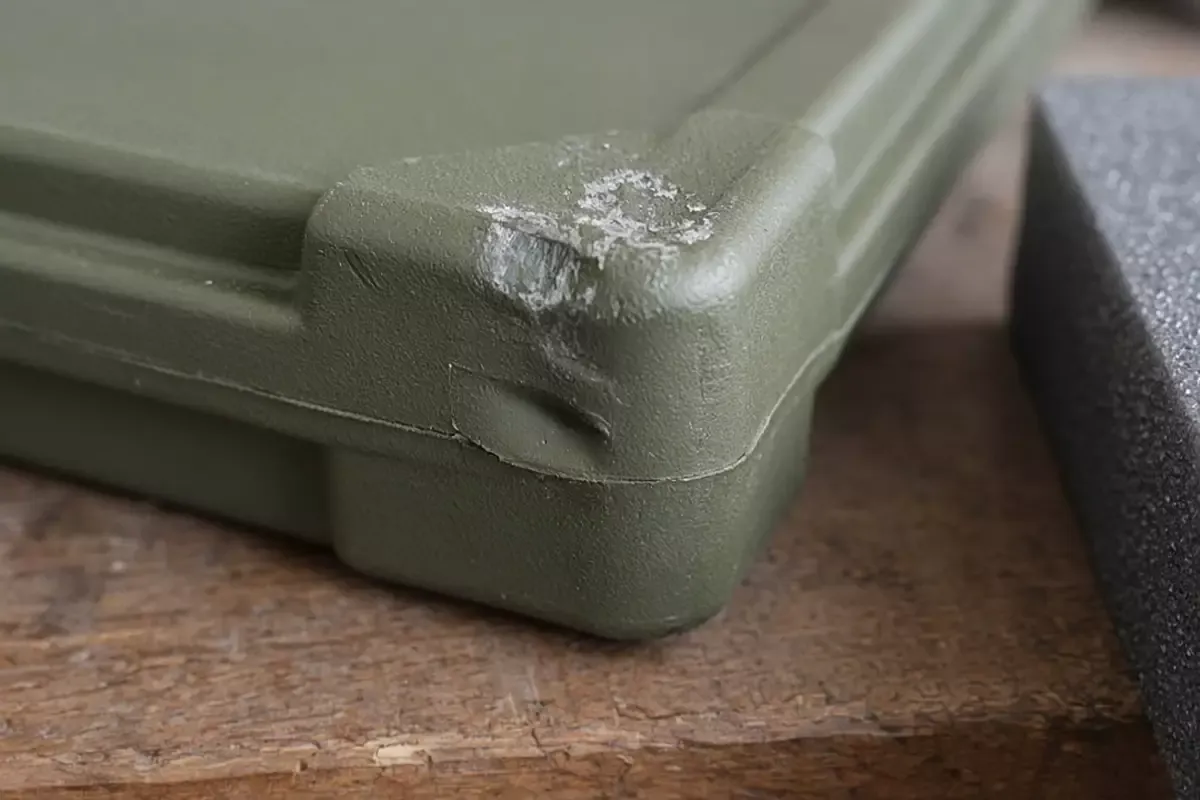
The photograph shows a scuffed corner. It is not a named product, and it is not a pass or fail test. Both FAA pages say damaged or recalled batteries and battery-powered devices that are likely to create sparks or a dangerous amount of heat must not be carried in carry-on or checked baggage, unless the damaged or recalled battery has been removed or otherwise made safe. The airline offers further guidance on recalled products. This page does not describe how to open a housing or remove cells.
The saved Explorer 3000 Pro text says: “Do not remove the battery pack without permission.” If repair is needed, it says to contact the local manufacturer. A scuff you cannot classify stays “unknown” in the damage cell, and unknown is not “carry.” A unit that will not start on the job is a different record. Use the field fault record for that symptom. The flight result on this sheet remains “do not carry” while the damage cell is yes or unknown.
Both FAA pages say passengers should notify the flight crew immediately if a lithium battery or device is overheating, expanding, smoking, or burning. That sentence is for the cabin. It does not clear a damaged unit at check-in.
Departure screening record
Copy this table, or download the screening record CSV. One row is one battery unit. A second battery, including an extra pack the manual calls a smart extra battery, gets its own row. This page did not open a watt-hour line for an extra battery, so that row starts blank.
Scroll horizontally to see all columns.
| Field | What to write |
|---|---|
| Date, carrier, flight date | The trip this record is for |
| Unit and manual edition | Name, model, and the edition you read |
| Capacity Wh | Printed watt-hours only |
| Output W | Printed watts, kept out of the watt-hour decision |
| Volts, amp-hours, calculated Wh | Only if both volts and amp-hours are printed and watt-hours are not |
| Chemistry word | The word the manual prints, such as LFP or lithium-ion |
| Damage or recall | Yes, no, or unknown |
| FAA band | 0–100, 101–160, over 160, or blank |
| Carrier reply | Date, watt-hour limit, quantity limit |
| Gate plan | Carry-on stays with the passenger, or the bag will be checked at the gate |
| Result | Do not carry, carrier confirmed this trip, or blank |
| Loads still needed if the unit stays behind | Devices and hours, for the sizing sheet |
A result of “carrier confirmed this trip” requires a written or recorded reply that names this unit’s watt-hours. It does not mean the next airline, or the same airline next month, has given the same answer.
When this record does not apply
This sheet is for a passenger on a U.S. flight, using the two FAA pages above. It is not a cargo or freight packing tutorial. It does not state another country’s limit. It does not promise that an airline will approve a 101–160 Wh spare battery. It does not move the 1,024Wh, 2,048Wh, or 3024Wh lines under 160. It does not tell anyone to split, open, or remove a battery to change the rating. Cold-weather charging and runtime estimates are outside this record. The power and lighting hub holds the sizing guide for hours of use.
Method and sources
The bands, the carry-on rule, the two-spare limit, the generator row, the watt-hour formula, and the damaged-battery sentence come from the Airline Passengers and Batteries page saved 11 October 2026, which states a last update of Friday, October 2, 2026. The gate-removal sentence, the short-circuit methods, the 2 gram lithium-metal line, and the citation of 49 CFR 175.10(a)(18) come from the PackSafe lithium-batteries page saved the same day, which states a last update of Tuesday, August 11, 2026. That page lists a phone, 405-954-0088, and hazmatinfo@faa.gov for questions about traveling with dangerous goods. Those are the FAA’s contacts, not a service this site provides.
The three capacity lines and the two “No” answers come from DELTA 2 User Manual V1.0, DELTA 2 Max User Manual V1.0, and the Explorer 3000 Pro manual for model JE-3000A, each saved 11 October 2026. SavvySkull did not measure these products. A later printing can change a sentence. If the book in the case disagrees with a cell here, the book wins, and the sheet should say so.
This page does not set a price, a runtime, or a list of stations that are allowed to fly. It does not apply one model’s watt-hours to a model that is not in the table.
Downloads
- Passenger flight battery screening record (CSV) CSV Blank sheet. Copy printed watt-hours only. Leave a cell empty when the label or the carrier reply does not give it.
Sources and versions
- Airline Passengers and Batteries , Federal Aviation Administration (PackSafe) Supports: Saved page fetched 11 October 2026. The page says it was last updated Friday, October 2, 2026. Rechargeable batteries of 0–100 Wh are allowed; 101–160 Wh need air-carrier approval; batteries over 160 Wh are forbidden. Spare lithium batteries, including power banks and portable chargers, are carry-on only. Two-spare limit for 101–160 Wh. Lithium-battery-powered generators that exceed 160 Wh are forbidden in both carry-on and checked baggage. Watt-hours equal volts times amp-hours; the page's example is 12 V times 8 Ah equals 96 Wh.
- PackSafe - Lithium Batteries , Federal Aviation Administration (PackSafe) Supports: Saved page fetched 11 October 2026. The page says it was last updated Tuesday, August 11, 2026. Spare lithium-ion batteries, including power banks, are carry-on only. If a carry-on is checked at the gate or planeside, spare lithium batteries and power banks come out of the bag and stay with the passenger. Terminals are protected from short circuit. Points to 49 CFR 175.10(a)(18).
- EcoFlow DELTA 2 User Manual V1.0 (EN) , EcoFlow Supports: Saved manual fetched 11 October 2026. Capacity 1,024Wh, 51.2V. AC output pure sine wave, 1,800W total, surge 2,700W. FAQ item 7: Can I bring the product on a plane? No.
- EcoFlow DELTA 2 Max User Manual V1.0 , EcoFlow Supports: Saved manual fetched 11 October 2026. Model EFD350. Capacity 2,048Wh. AC output pure sine wave, 2,400W total, surge 4,800W. FAQ item 7: Can I bring the product on a plane? No.
- Jackery Explorer 3000 Pro User Manual (JE-3000A) , Jackery Supports: Saved manual fetched 11 October 2026. Version JAK-UM-V1.0. Model JE-3000A. Capacity lithium-ion 70Ah/43.2V DC (3024Wh). Total AC output 3000W max, 6000W surge peak. The saved text has no airplane yes or no. It says not to remove the battery pack without permission.
Next steps
How to Size a Portable Power Station for Outdoor Work
Size a portable power station for outdoor work: list loads, check continuous and surge watts, estimate watt-hours with stated assumptions, and verify charging.
Portable Power Station vs Generator: Choosing a Power Source for Outdoor Work
Compare portable power stations, fuel and inverter generators, and battery-inverter systems for outdoor work by load, replenishment, safety and upkeep.

Portable Power & Lighting
Work out how much portable power and light an outdoor site needs, then compare options and put the requirement into a purchase request.